
Length
14 days
Departs
Longyearbyen
Price
On quote
Sails
mid-May – Sep
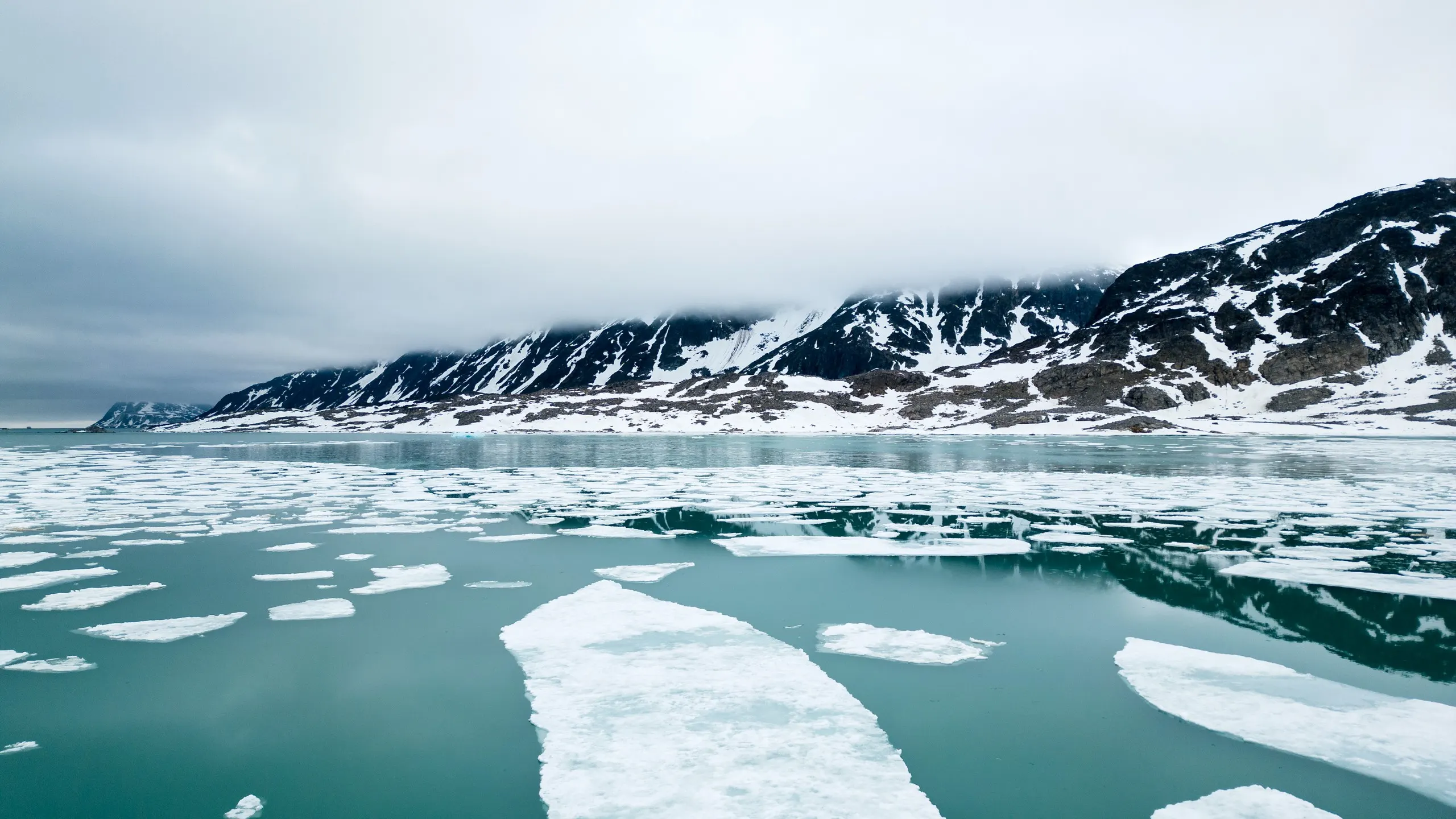
14 days from Longyearbyen across the Greenland Sea to the wilderness coast of Northeast Greenland and back, aboard a Polar Code-compliant expedition vessel. You trade the familiar Svalbard fjords for some of the least-travelled coastline in the Arctic — enormous fjord systems, drift ice, and, in the shoulder season, a chance of aurora as the nights return. Zodiac landings run where conditions allow.
This is a two-week crossing, not a loop, and the remoteness is the point. Northeast Greenland’s national park is larger than most countries and almost entirely uninhabited. Reaching it by sea from Svalbard puts you in country very few travellers ever see.
The route
| Leg | Waters | What you’ll likely see |
|---|---|---|
| 1 | Longyearbyen | Board ship, Isfjorden departure |
| 2–3 | Greenland Sea crossing | Whales, drift ice, open-ocean birds |
| 4–5 | NE Greenland coast | First fjords, walrus, glacier fronts |
| 6–9 | Greenland fjord systems | Polar bears, musk oxen, Zodiac landings |
| 10 | Outer coast | Seabird cliffs, ice navigation |
| 11–13 | Return crossing | Whales, drift ice, possible aurora |
| 14 | Longyearbyen | Disembark, transfer to airport |
Life on board
The vessel is built and operated to the Polar Code for ice-affected waters and carries roughly 57 crew, including 15 polar specialists and an onboard physician — important on a route this far from support. All meals are served on board, and naturalist lectures cover the crossings with geology, ice, and the ecology of both coasts. Daily Zodiac excursions take you ashore and along ice edges as ice and weather permit. Heavy ice can reshape the Greenland leg without notice.
Wildlife odds, honestly
Northeast Greenland adds musk oxen to the usual Arctic cast and holds strong polar bear and walrus potential, with whales likely on the crossings and seabirds throughout. None of it is guaranteed: this is remote, ice-dependent country where a single voyage can be exceptional or sparse. Aurora is only a shoulder-season possibility, never a fixture under summer’s midnight sun. The naturalists read ice daily and route for the best odds — the Arctic remains in charge.