
This page answers the questions people ask most before booking a Svalbard trip: getting there, the seasons, aurora odds, polar bear safety, money, language, internet, travelling with kids, mobility, and how far ahead to plan. The answers stay honest: where something depends on luck or season, we say so rather than overpromise. For deeper detail, see the dedicated guides on getting there, costs, safety, packing, and when to go. If a question here points to a decision, the linked guides carry the full version.
Guide
Svalbard Travel FAQ
Quick, honest answers to the questions people ask before booking a Svalbard trip: how to get there, when to go, aurora odds, polar bear safety, money, language, internet, travelling with kids, mobility, and how far ahead to book.
Quick answers
Common questions
How do I get to Svalbard?
You fly. There are no passenger roads or ferries. The standard route is a direct flight from Oslo (OSL) to Longyearbyen (LYR), about 3 hours, with SAS and Norwegian. Some flights route via Tromsø. From most European cities you make one stop in Oslo.
Do I need a visa for Svalbard?
Svalbard itself is visa-free under the Svalbard Treaty of 1920. But you reach it through Norway, which is in the Schengen Area, so your transit through Oslo must meet Schengen rules. Carry a valid passport; Svalbard is outside Schengen.
Do I need a passport?
Yes. Because Svalbard sits outside the Schengen Area, flying there from mainland Norway means crossing a border. Bring a valid passport or national ID for the trip.
When is the best time to visit?
It depends on what you want. Light winter (roughly March to May) suits snowmobiling and husky trips with daylight. Summer (June to August) brings the midnight sun, boats, and wildlife. The polar night (late October to mid-February) is for darkness and a chance at aurora.
When is the polar night?
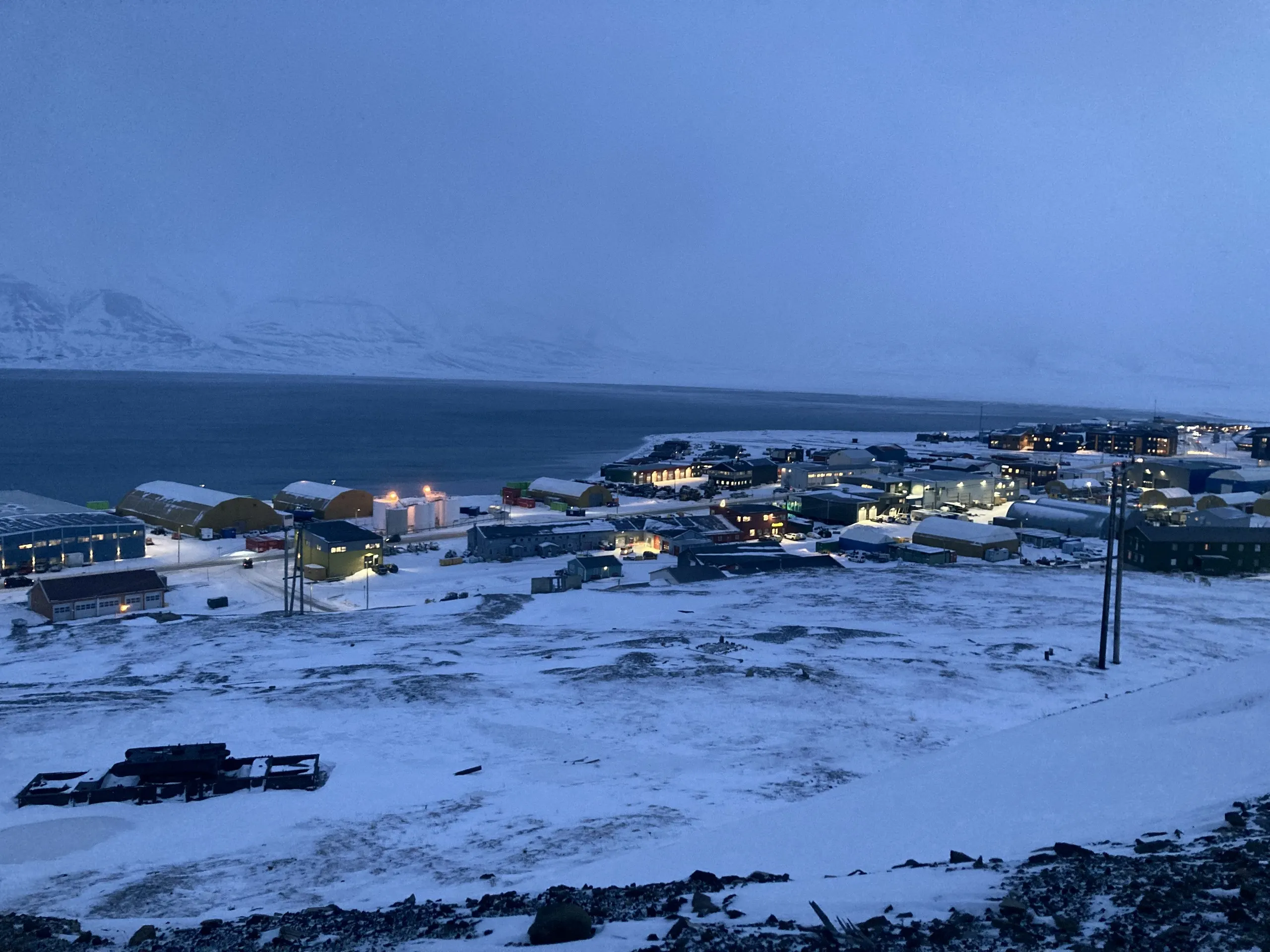
The sun stays below the horizon from 26 October to 15 February. During the deepest weeks there is no real daylight, only blue twilight at best. It is the darkest, quietest season.
When is the midnight sun?
The sun never sets from 20 April to 22 August. It stays bright around the clock, which is why a sleep mask is worth packing for a summer visit.
What are my chances of seeing the northern lights?
Aurora is possible during the dark months, best in the polar night when the sky is darkest. But it depends on solar activity and clear skies, and no trip can promise it. Treat a good display as luck, not a guarantee.
Is Svalbard safe?
Inside Longyearbyen, yes; you walk around freely. Outside town, polar bears are a real risk and the law requires an armed, trained guide (or your own rifle and permit). Cold, weather, and glacier terrain are the other risks, all managed on guided trips.
Can I leave town on my own?
Not safely or legally without protection. Beyond the settlement boundary, marked by the famous 'Gjelder hele Svalbard' sign, you need an armed guide or your own firearm and permit. The simplest option is to join a guided trip.
How cold does it get?
January averages around −14°C and feels colder in wind; July is about +7°C. Winter cold is manageable with proper layers, and guides provide expedition suits for activities.
What currency is used?
The Norwegian krone (NOK). Cards are accepted everywhere, so you do not need cash.
What language do people speak?
Norwegian is the main language, but English is widely spoken in Longyearbyen, including by guides and in shops and restaurants. You will manage easily in English.
Is there internet and mobile coverage?
Yes. Longyearbyen has internet and mobile coverage, so you can stay connected in town. Coverage drops off once you head into the wilderness on guided trips.
Can I bring children?
Families do visit, but Svalbard is a remote Arctic destination with real cold and activity-based days. Check the age and fitness requirements for specific activities, and plan a trip that matches what younger travellers can handle.
Is Svalbard accessible for travellers with limited mobility?
Town is navigable, but many activities involve boats, snowmobiles, ATVs, or walking on snow and glacier terrain. If mobility is a concern, ask about specific outings in advance so the trip can be planned around what works for you.
How much does a trip cost?
Beyond flights, budget roughly €200 to €500 per day depending on comfort. Our guided packages start at €1,290 for 4 days in winter and €2,290 for 7 days. A round-trip flight from Oslo runs between €250 and €500.
How far ahead should I book?
Two to four months for short winter trips, three to five for the busy summer. Flights and rooms sell out fastest in peak summer and the December holidays, and early flight booking is the biggest saving.
Are flights included in tour prices?
No. Package prices cover guides, gear, accommodation, transfers, and meals on active days, but not flights to Longyearbyen or travel insurance. Budget the flight separately.
What should I pack?
For winter: insulated boots, wool base layers, a windproof shell, balaclava, and goggles. For summer: layers, waterproof boots, a wind shell, and a sleep mask for the midnight sun. Guides provide expedition suits for activities. A swimsuit for the sauna is the most-forgotten item.
Updated 6 June 2026.