
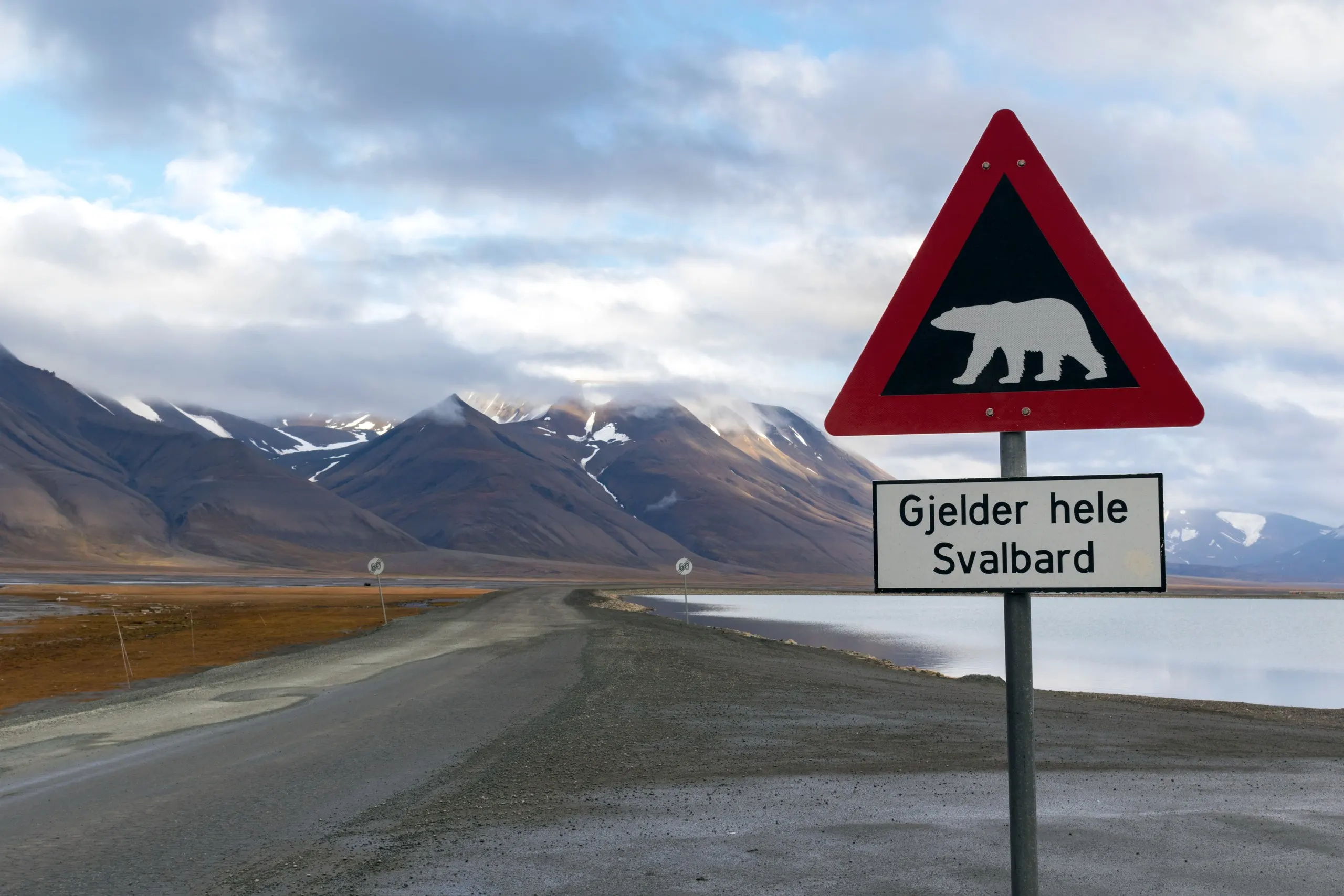
Svalbard is safe for tourists inside Longyearbyen; you walk the streets freely, the same as any small town. The danger sits outside the settlement, where polar bears live and the law requires protection. Leaving town legally means going with an armed, trained guide, or carrying your own rifle with the right permit. That single rule shapes how every visit works.
The polar bear rule, plainly
Polar bears are a genuine risk across Svalbard, and the authorities treat them as one. The famous yellow road sign at the edge of town (“Gjelder hele Svalbard,” meaning “applies to all of Svalbard”) marks the boundary where bear protection becomes mandatory. Cross it without an armed guide or your own firearm and permit, and you are both breaking the rules and putting yourself in danger.
This is why guided trips are the norm here, not an upsell. Your guide is armed, trained, and watching the terrain while you look at it. On a guided outing you do not need your own weapon and you do not need to think about the rule; it is already handled.
Will you actually see one?
Most visitors do not see a polar bear, and any honest guide will tell you so. Bears are sea-ice and remote-coast animals; they are not roaming around Longyearbyen. Sightings come down to luck and season. Boat-based expeditions that reach the ice edge and far coasts improve the odds, but no trip can guarantee a bear. Treat a sighting as a rare bonus, not the plan.
In town you are safe
Inside the settlement, life is ordinary. You can walk to dinner, browse shops, and move around without a guide or a weapon. Bears reaching town are rare and handled by local authorities. The mental model is simple: in town, relax; beyond the sign, go guided.
The other risks: all manageable
Bears get the attention, but the cold and the terrain matter just as much, and all of it is manageable with the right approach.
- Cold. January averages about −14°C, far colder with wind; July is around +7°C. Frostbite and hypothermia are real but preventable. Guides issue expedition suits and gear for activities; you bring solid base layers, a windproof shell, and good boots.
- Weather changes. Conditions shift fast. Guides read the forecast and reroute or postpone when needed: follow that judgement rather than pushing on.
- Glacier terrain. Crevasses and ice are hazards on glacier outings, which is exactly why those trips are roped, equipped, and led.
None of these should stop you. They are the standard conditions of an Arctic trip, and the entire guided system exists to keep them in check. The safe, sensible way to see Svalbard beyond town is to go with a guide: that one decision covers the bears, the cold, and the terrain at once.