
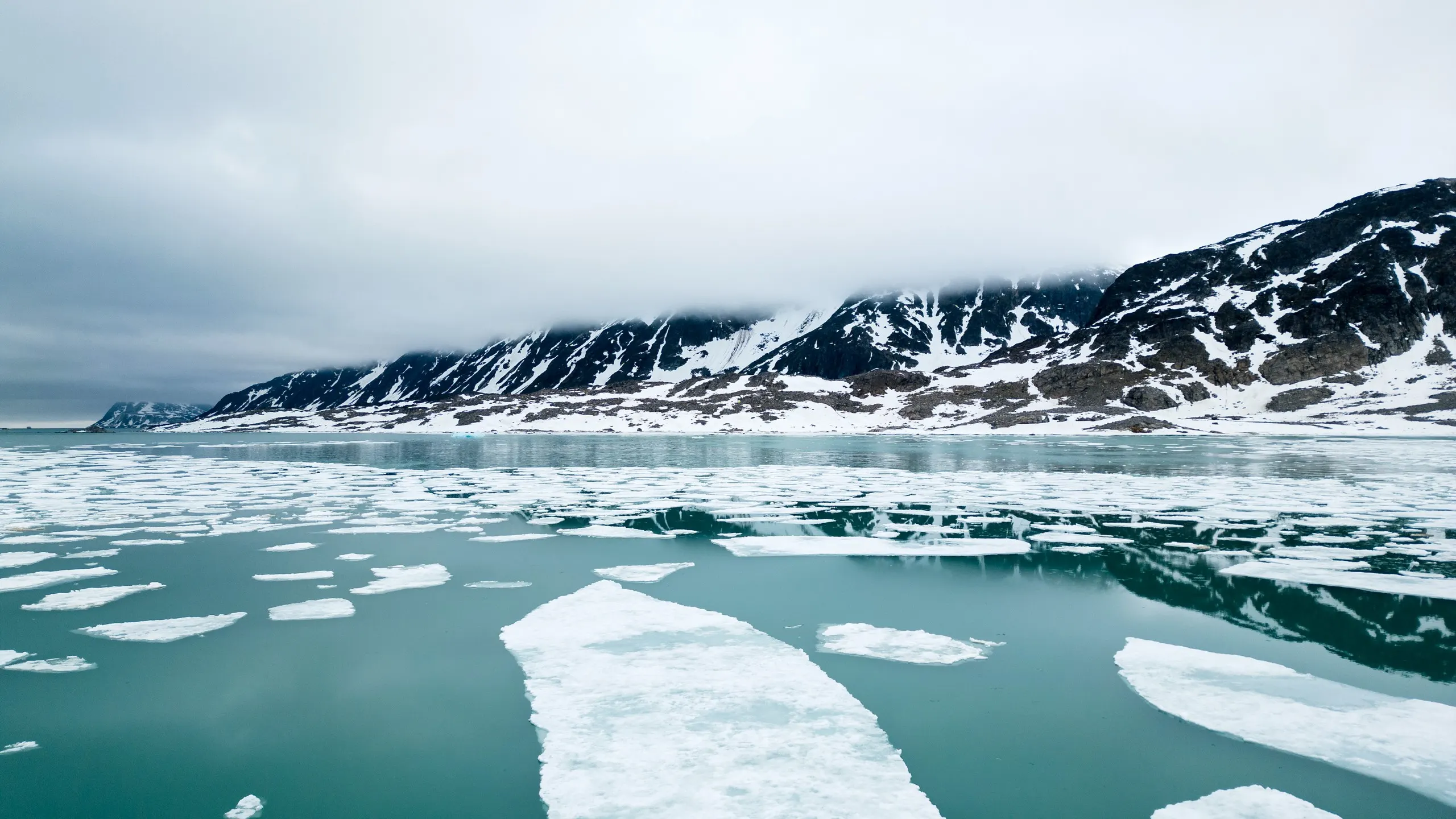
Choose Svalbard for structure, Greenland for scale. Both are the genuine High Arctic — not softened versions like Iceland — but they feel different to travel. Svalbard is compact and organised: one route in, one base town, guided activities laid out for you. Greenland is enormous and remote, built around ice sheet, deep fjords, and Inuit communities, with logistics that demand more planning. They suit different travellers.
How they compare
| Factor | Svalbard | Greenland |
|---|---|---|
| Wildlife | Polar bears, walrus, reindeer, Arctic fox (sightings are luck) | Polar bears in remote regions, whales, musk ox, seals (sightings are luck) |
| Aurora | Strong in the polar night, darkest skies | Strong in the dark season across much of the territory |
| Cost | High; ~€200–€500/day beyond flights, guided activities required | High; remote travel and limited infrastructure raise costs |
| Accessibility | One simple route: Oslo → Longyearbyen (~3h); guided hub | Vast; more complex internal travel between settlements |
| Crowds | Few visitors, small settlements | Few visitors, spread across a huge area |
| Daylight | Polar night 26 Oct–15 Feb; midnight sun 20 Apr–22 Aug | Long polar nights and midnight sun, varying by latitude |
| Culture | Settlement and expedition history | Living Inuit culture and communities |
The honest trade-off
Svalbard’s advantage is organisation. There is essentially one way in — fly via Oslo to Longyearbyen — and once there, everything runs from a single base. Guided activities are the norm because polar bears make independent travel beyond town unsafe, which means the structure is built for you. That makes it the simpler High Arctic trip to plan and execute, especially for a first visit.
Greenland’s advantage is scale and culture. It is far larger, with the great ice sheet, dramatic fjord systems, and Inuit communities woven through the landscape. The cost of that scale is logistics: travel between settlements is more involved, and there is no single tidy hub. For travellers who want vastness and a living culture, and who are comfortable with more complex planning, that trade is worth it.
Which should you pick?
- Pick Svalbard if you want organised guided activities, a single easy route in, and the structure of one base town — the more straightforward High Arctic trip.
- Pick Greenland if you want sheer scale, the ice sheet and fjords, and Inuit culture, and you are ready for more complex travel to reach it.
- Both deliver real Arctic. The choice is less about which is “more Arctic” and more about whether you want compact and structured (Svalbard) or vast and remote (Greenland).
If simple logistics and a guided hub matter most, Svalbard is the clearer choice. If endless remote landscape and culture pull harder, Greenland answers.
Quick answers
- Is Svalbard or Greenland easier to visit?
- Svalbard is easier. It has a single straightforward route — fly Oslo to Longyearbyen in about 3 hours — and guided activities are well organised from one base town. Greenland is larger and more remote, with more complex internal travel between settlements, so it takes more planning.
- Which has better chances of seeing polar bears?
- Both have polar bears, and in both, sightings are luck. Svalbard's bears live on the sea ice and remote coasts, best reached by boat expeditions. Greenland also has bears, mainly in remote regions. Neither destination can promise a sighting — most visitors to either do not see one.
- Which is better for first-time Arctic travellers?
- Svalbard, generally, because the logistics are simpler and activities run from one organised hub. Greenland rewards travellers who want vast, remote landscapes and Inuit culture and are comfortable with more complex travel between settlements. Both are genuine High Arctic, not mild substitutes.
Updated 6 June 2026.