
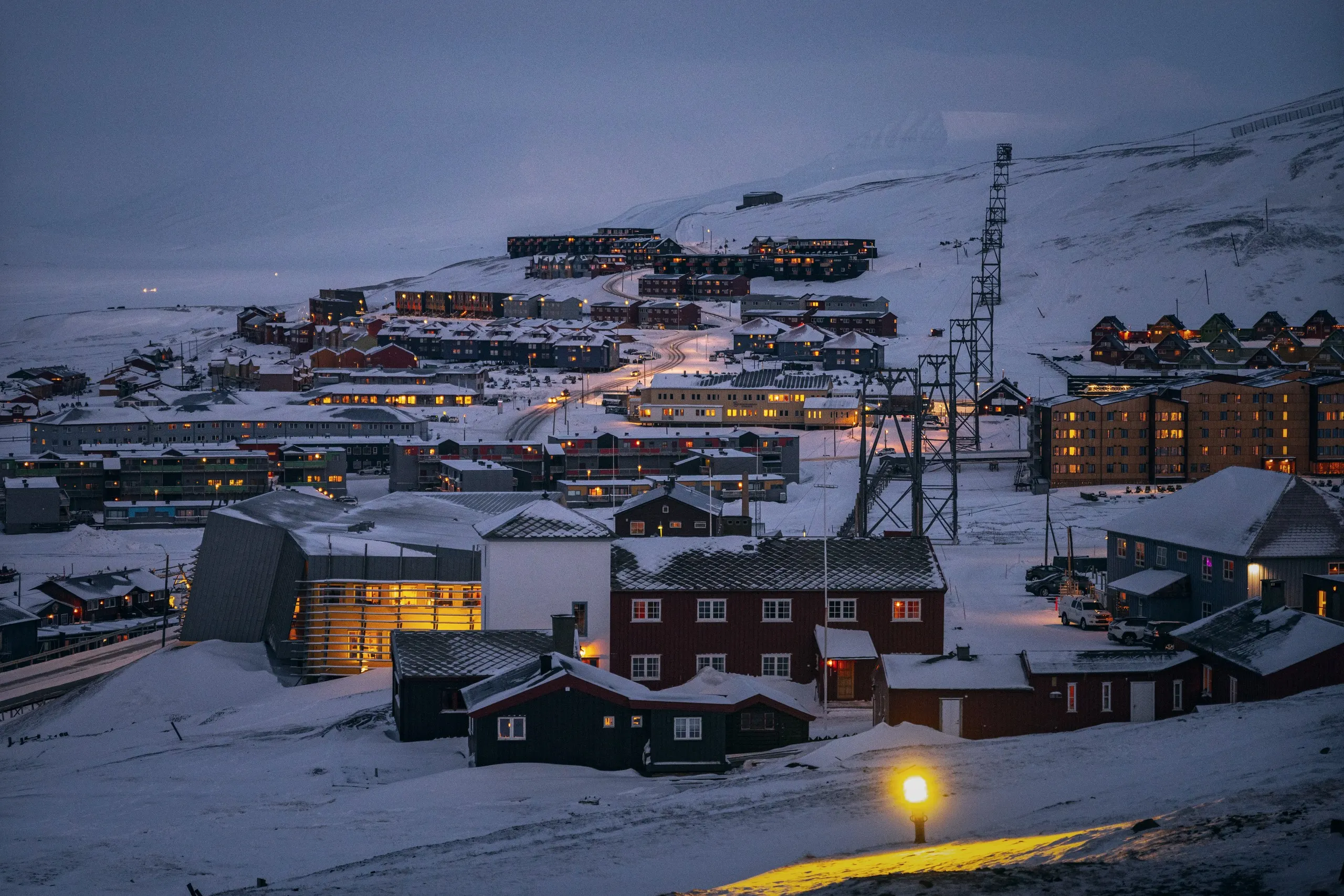
From late October to mid-February the sun never climbs above the horizon in Longyearbyen. This is the polar night: the dark season, our brand’s frame for October through February. Expect temperatures of −9 to −15°C, the best northern-lights window of the year, and full husky, ice-cave, and snowmobile programmes. Winter trips start from €1,290.
The dark is not one flat thing. At the edges — late October and early February — you get hours of blue-grey twilight around midday. In the deep middle, roughly 11 November to 30 January, it is true civil polar night: no real daylight, just a dim glow at best. Your eyes adjust faster than you expect, and snow reflects every scrap of moon and town light.
What the light does
There is no sunrise and no sunset for the whole window. Instead the sky moves through shades of twilight or stays dark, and the snow does the work of bouncing light around. This is exactly why aurora is at its strongest now: a dark sky for most of the 24 hours means more chances to catch it when the clouds break and solar activity cooperates. It also means headlamps are standard kit and your sense of time loosens — meals and activities anchor the day instead of the sun.
What you can do
| Activity | Available | Sweet spot |
|---|---|---|
| Aurora chasing | Oct–Feb (peak) | Nov–Jan |
| Husky sledding | Dec–May | Dec–Feb |
| Snowmobile safari | Nov–May | Feb (late polar night) |
| Glacier ice caves | Nov–Apr | Dec–Feb |
| Town & culture (museum, brewery) | Year-round | Any month |
Aurora and snowmobile safaris are often combined: guides time the ride for the darkest, clearest hours, then cut engines and lights so you can watch the sky. Ice-cave trips descend into a glacier’s frozen meltwater channel — slower and warmer underfoot than it sounds. Husky lines run through Bolterdalen once there is enough snow, usually from December.
What to expect from weather
| Month | Avg temp °C | Light |
|---|---|---|
| October | −4 | Sun sets for the season ~26 Oct |
| November | −9 | Deep polar night begins ~11 Nov |
| December | −12 | True civil polar night |
| January | −14 | Darkest stretch, ending ~30 Jan |
| February | −15 | Coldest month; twilight returns mid-month |
It is cold but dry, and the issued insulated suit, boots, gloves, and headlamp handle it. February is statistically the coldest month even as the light starts to return, so layering matters more than the calendar suggests. Wind is the real variable — a still −15°C is comfortable on the move; a windy one is not.
The polar night suits travellers who want darkness, aurora odds, and a quiet, social town rather than daylight scenery. If you need to see the landscape in full light while keeping the snow, jump to our Light Winter frame from March. If you want green tundra, boats, and wildlife, that is the Midnight Sun season.
Quick answers
- Does the sun really never rise during the polar night in Svalbard?
- Yes. From 26 October to 15 February the sun stays below the horizon in Longyearbyen. From 11 November to 30 January it is true civil polar night — no usable daylight at all, only deep blue twilight around midday at the edges of that window.
- Can you see the northern lights during the polar night?
- This is the strongest aurora season because the sky is dark for most of the 24 hours. No one can guarantee a sighting — it needs clear skies plus solar activity — but October through March gives you the most hours of darkness to wait under.
- Is it too cold to do anything in the polar night?
- No. Temperatures sit around −9 to −15°C, which is cold but dry and manageable with issued gear. Husky sledding, snowmobile aurora safaris, and glacier ice caves all run through these months.
- What is there to do besides chasing aurora?
- Husky sledding (Dec–May), snowmobile safaris (best Feb–May but running from Nov), glacier ice caves (Nov–Apr), and town culture — the brewery, museum, and restaurants stay lively through the dark.
- Is the constant darkness depressing?
- Most visitors find it calmer than expected. The light is not pitch black for the whole window — it shifts from twilight to true dark and back — and the town leans into it with lights, food, and a slow, social rhythm.
Updated 6 June 2026.