
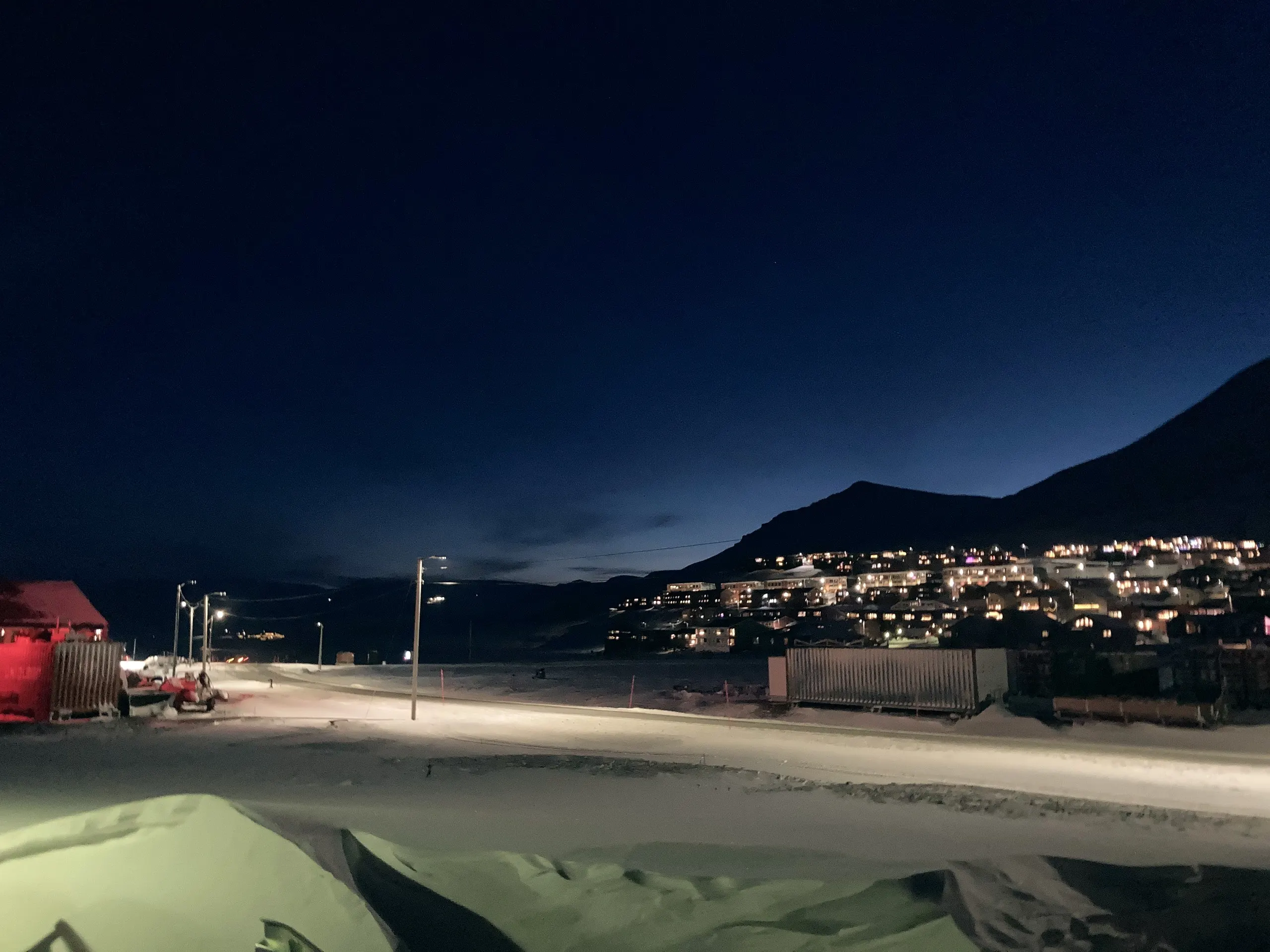
January is the deep polar night: around −14°C, no sunrise at all, and the darkest stretch of the year ending 30 January. It is our Polar Night season at its most extreme. The verdict: come in January for darkness and aurora odds, not for scenery you can see.
The sun does not rise. For most of the month it is genuine civil polar night — no usable daylight, just a dim glow near midday toward the end. Snow and town lights do the lighting work, and your eyes adjust quickly.
Light & weather
| Avg temp | Daylight | Season |
|---|---|---|
| −14°C | None (sun below horizon); faint midday twilight by ~30 Jan | Polar Night |
It is cold but dry. Wind is the deciding factor — a still −14°C is fine on the move, a windy one bites. The issued suit, boots, gloves, and headlamp handle the conditions. Pack a warm base layer, a neck gaiter, and a head torch of your own as backup; everything else is provided on guided trips. Days are organised around activity slots and meals rather than sunrise, so jet lag matters less than usual — there is no morning light to wake to either way.
What’s running this month
January runs the full dark-season programme. Aurora chasing is at its strongest (Oct–Mar) thanks to near-constant darkness. Husky sledding (Dec–May) and snowmobile safaris (Nov–May) are both operating, and glacier ice caves (Nov–Apr) are open. Boats, hiking, and ATV are all out of season — those wait for summer. Snowmobile aurora safaris are the signature January combination: ride out, cut the engines, watch the sky.
Town stays busy through the dark: the museum, the brewery, restaurants, and the gallery all keep regular hours, which matters when the activity day is short on light but long on waiting for clear skies. A typical visit pairs one or two active days — husky, snowmobile, or ice cave — with flexible evenings reserved for aurora attempts whenever the forecast cooperates. Guides watch the cloud cover hour by hour and move plans around it, so build slack into your itinerary rather than packing every slot.
Should you come in January?
Come in January if you want the deepest, quietest darkness and the maximum number of dark hours to wait for aurora under. It suits travellers who find the idea of a sunless month exciting rather than unsettling, and who want husky and ice-cave trips without crowds.
Pick a different month if you need daylight: you will not see the landscape in full light, only twilight and dark. For snow activities with returning daylight, March or April are the better call. For green tundra, wildlife, and boats, you want summer — see July.
Quick answers
- Can you see the northern lights in January in Svalbard?
- Yes — January sits inside the polar night, so the sky is dark almost around the clock, giving the most hours to catch aurora. Sightings still need clear skies and solar activity, so nothing is guaranteed.
- Does the sun come up at all in January in Svalbard?
- No. The sun stays below the horizon all month; the darkest civil polar night runs until 30 January. You get only faint twilight at midday near the end of the month.
- How cold is Svalbard in January?
- The average is around −14°C. It is cold but dry, and the issued insulated suit and gear make activities comfortable as long as it is not windy.
- Is January a good time to visit Svalbard?
- Yes, if you want the deepest darkness and strongest aurora odds. If you want to see the landscape in daylight, choose March or April instead.
Updated 6 June 2026.