
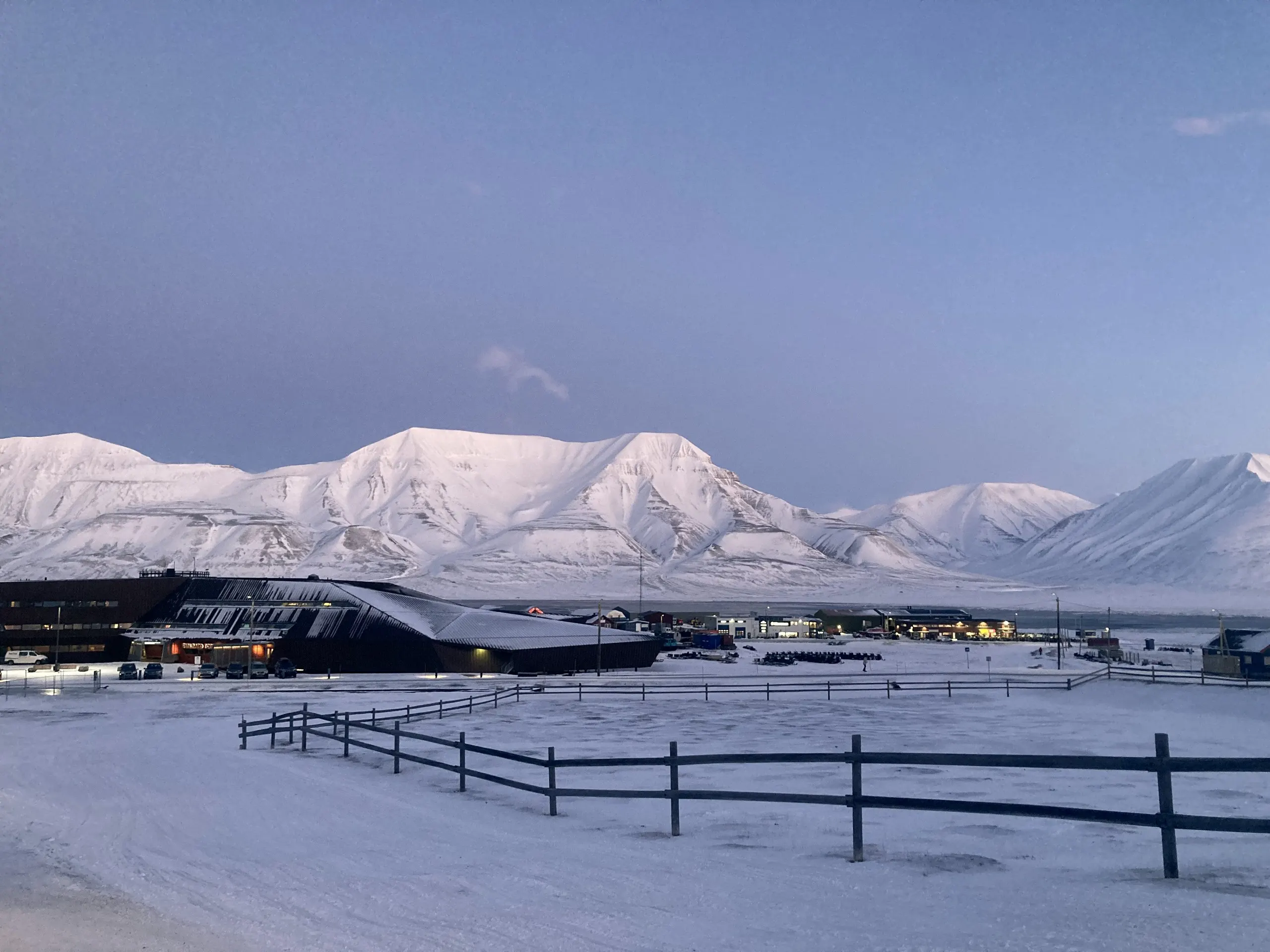
March is the local favorite. At around −14°C it is still genuinely cold, but daylight returns fast and the nights stay dark enough for aurora — the only month where both overlap with full snow. This is our Light Winter season starting strong. The verdict: the best single month for most winter visitors, but book early.
After the sunless months, the light comes back at speed. You wake to real daylight, sled across terrain you can actually see, and still have dark-enough nights to chase the lights.
Light & weather
| Avg temp | Daylight | Season |
|---|---|---|
| −14°C | Long and fast-growing; nights still dark | Light Winter |
It is as cold as midwinter on paper, but the daylight transforms it. The snowpack is deep and reliable, which makes March one of the most dependable months for snow activities. The low Arctic sun also stays near the horizon for hours, so you get long stretches of pink and gold “golden-hour” light across the peaks rather than a brief sunrise and sunset — the best conditions of the year for landscape photography on snow.
What’s running this month
March runs the full snow programme at its best. Snowmobile safaris (Nov–May) and husky sledding (Dec–May) are both prime. Glacier ice caves (Nov–Apr) are open. Crucially, aurora chasing (Oct–Mar) is still possible — March is the cutoff, so this is your last good month for it on snow. Boats, ATV, and hiking are still out of season. The overlap of aurora-dark nights and long bright days is what makes March special.
That overlap also shapes how you plan the day. Use the long daylight for the active core — a full-day husky tour or a long snowmobile route to a glacier or an east-coast viewpoint — and keep an evening or two open for aurora once it is dark. Few months let you do both well, which is exactly why March books up. Because it sits in peak demand alongside April, the best small-group departures and the popular holiday weeks fill 2–4 months ahead, so reserve early if your dates are fixed.
Should you come in March?
Come in March if you want one month that does it all: deep snow, long daylight, prime snowmobile and husky conditions, and a real chance of aurora. It suits first-time visitors who want the classic Arctic winter without the total darkness of midwinter.
Pick a different month only for specific reasons. If aurora does not matter and you want the warmest, longest-daylight snow conditions, April is slightly more comfortable. If you want the deepest darkness for aurora, January gives more dark hours. For summer wildlife and boats, see July. Note that March is peak demand — reserve 2–4 months out.
Quick answers
- Can you see the northern lights in March in Svalbard?
- Yes — March is the last month with nights dark enough for aurora, and it overlaps with strong activity. It is the only month where you can realistically get both aurora and long daylight hours.
- Is March a good time to visit Svalbard?
- Very. It is a local favorite because you get full snow plus returning daylight, prime snowmobile and husky conditions, and a remaining chance of aurora. Just book early — it is a peak-demand month.
- How much daylight does Svalbard get in March?
- A lot, and growing fast. After the polar night, daylight increases by several minutes a day through March, giving long, bright days while the nights still get dark enough for aurora.
- How cold is Svalbard in March?
- Around −14°C on average — as cold as January on paper, but the returning daylight changes the whole experience.
Updated 6 June 2026.