
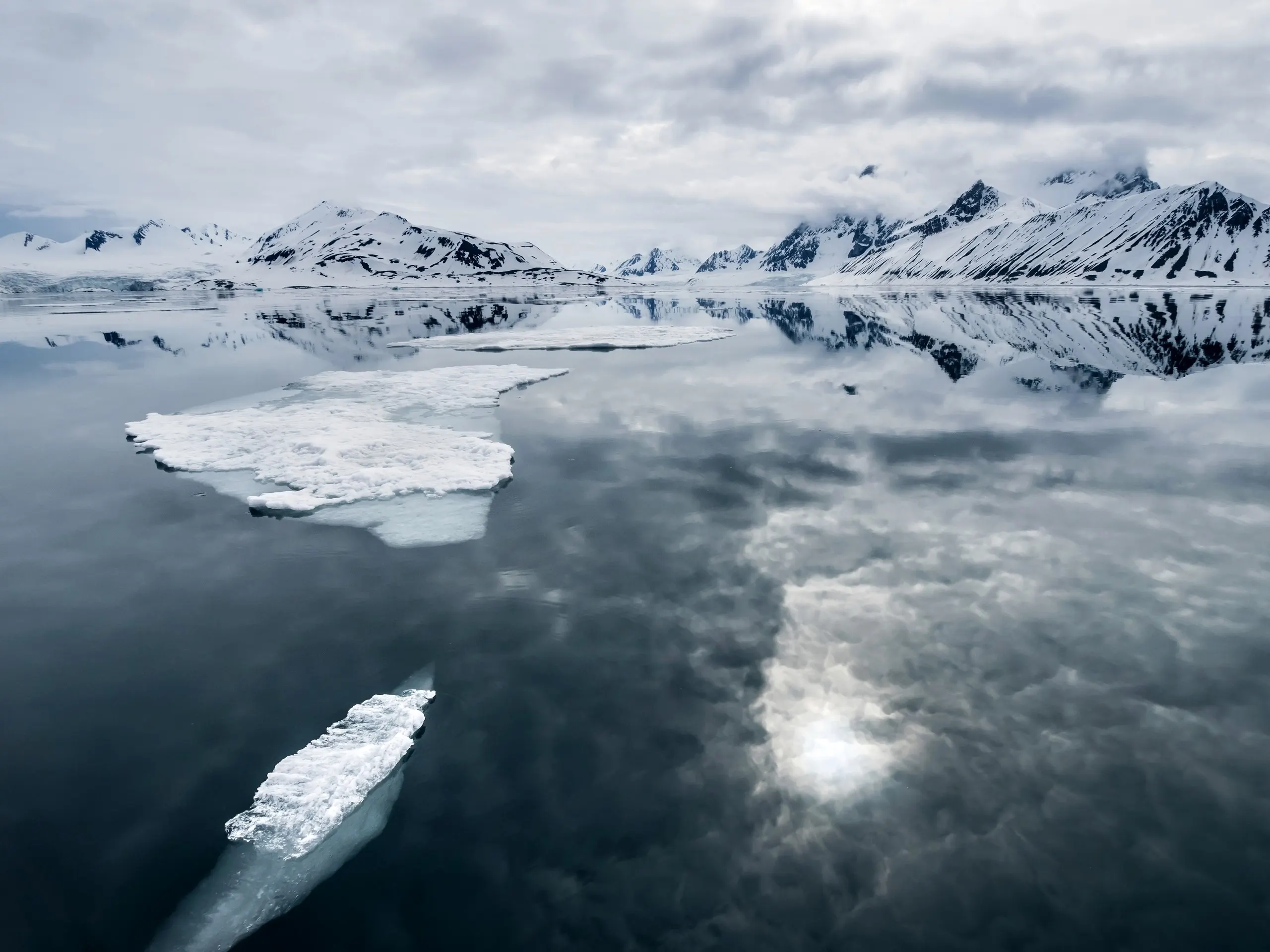
May is the switch month. At around −3°C, winter and summer overlap: early May still runs snow trips, then around mid-May the fjords open, boats begin, and the island hands over to the midnight sun. The verdict: a flexible transition — pick early May for the last snow, or late May for the first boats and wildlife.
This is the only month that genuinely belongs to two seasons. The snow programme winds down as the thaw sets in, and the summer programme starts up as the water opens.
Light & weather
| Avg temp | Daylight | Season |
|---|---|---|
| −3°C | Approaching 24-hour daylight; midnight sun by mid-month | Light Winter → Midnight Sun |
It is the warmest it has been since autumn but still below freezing on average early on. The snow is softening, which is exactly why snow trips have a hard cutoff around mid-May. The exact timing of the switch shifts year to year with conditions, so if your dates land mid-month, treat both snow and boat plans as provisional and confirm closer to the time rather than committing months ahead to one or the other.
What’s running this month
May is split. Early May still runs snowmobile (Nov–May) and husky sledding (Dec–May) while the snow holds — these end around mid-month. As the fjords open, boat trips and walrus watching (May–Oct) begin, and hiking (May–Sep) starts on the snow-free ground. Glacier ice caves have closed (they end in April), and ATV (Jun–Sep) and full expedition cruises ramp up from late May into June. Aurora is gone for the season.
The reward for that uncertainty is a quiet island between two peaks. Early May misses the March–April winter rush; late May arrives before the July–August summer crowds. Wildlife begins to stir as the migratory seabirds return and the first boats reach walrus haul-outs, but you share it with far fewer visitors than high summer. For travellers who value space over a guaranteed activity menu, the transition is the point, not a drawback.
Should you come in May?
Come in early May if you want one last shot at snow activities in full daylight without the peak-season crowds of March and April. Come in mid-to-late May if you want to be there as the fjords open — the first boats, the first walrus and seabirds, and quiet conditions before the summer rush.
Pick a different month if you want reliability rather than transition. For guaranteed snow and the full husky and snowmobile programme, choose March or April. For full summer wildlife and boats at their peak under the midnight sun, July is the safer bet. For aurora, you need the dark season — see January, where near-constant darkness gives the most hours to wait for the lights.
Quick answers
- Can you see the northern lights in May in Svalbard?
- No. By May the midnight sun has arrived and the sky never gets dark, so aurora is not possible. For northern lights, visit between October and March.
- Is there still snow in Svalbard in May?
- In early May, yes — snowmobile and husky trips run until around mid-May. After that the thaw makes snow terrain unreliable and the season switches to boats and hiking.
- Is May a good time to visit Svalbard?
- It is a flexible transition month. Early May gives you the last reliable snow trips; mid-to-late May opens the fjords for boats and wildlife under the midnight sun. It works well if you want one foot in each season.
- When does the midnight sun start in Svalbard?
- The sun is technically up around the clock from 20 April, but the summer travel season — open fjords and boats — begins around mid-May.
Updated 6 June 2026.