
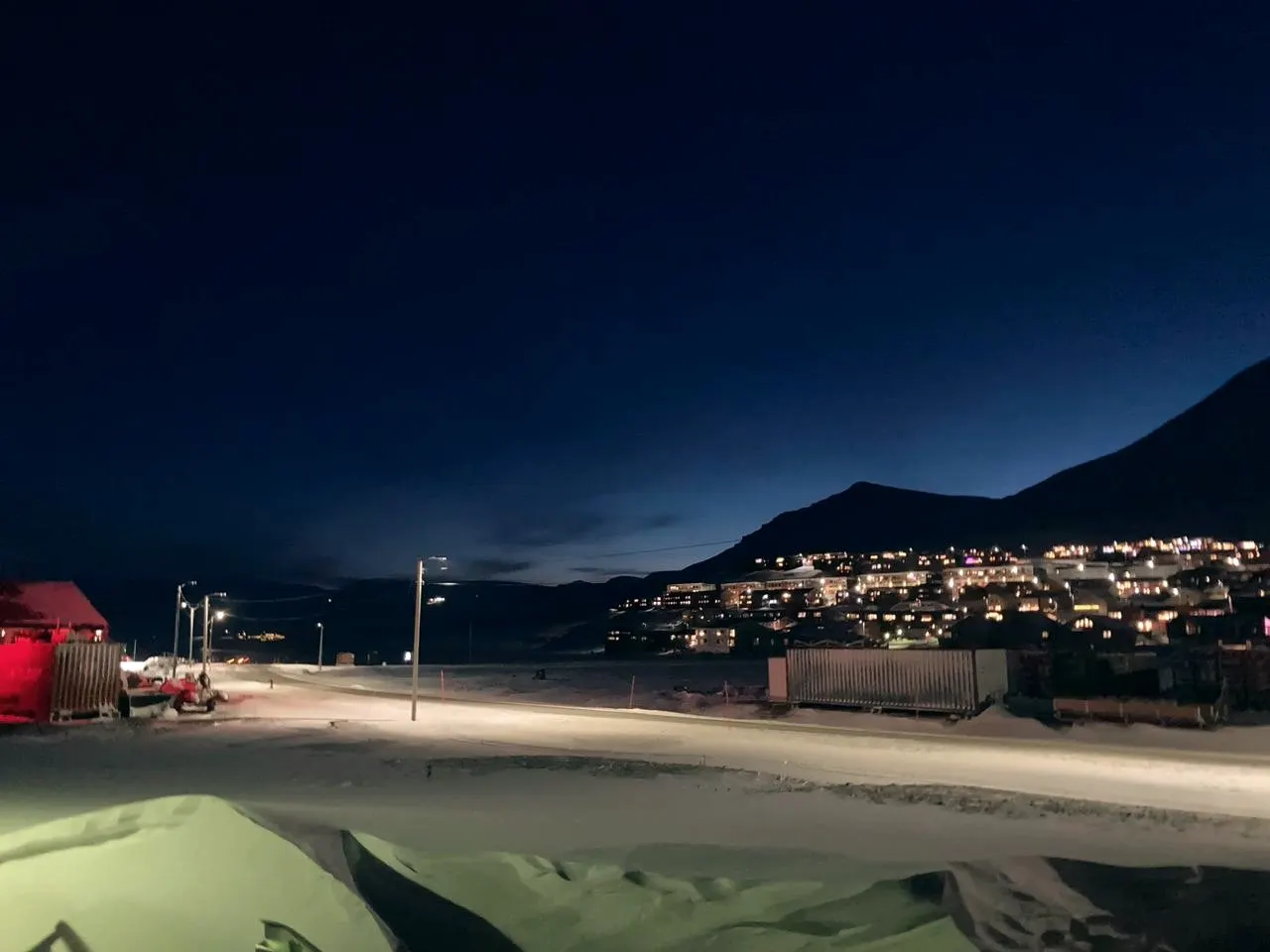
November sinks into the deep dark. At around −9°C the sun has already set for the season, and from about 11 November it becomes true civil polar night — no real daylight at all. Aurora season is strong, snowmobile and ice caves are running, and husky is starting up. This is the Polar Night season settling in. The verdict: a strong month for darkness and aurora, not for anyone who needs daylight.
The early month still has a faint midday glow at the horizon; by mid-November that is gone and the island runs on town lights, moonlight, and snow-glow.
Light & weather
| Avg temp | Daylight | Season |
|---|---|---|
| −9°C | None; deep civil polar night from ~11 Nov | Polar Night |
It is cold and dry. The constant darkness is the defining feature — your eyes adjust, and headlamps become standard kit. Wind, not the thermometer alone, decides how cold a day feels. Bring your own head torch as a backup and a warm base layer; the heavy outer gear is issued on guided trips, so you do not need to arrive with an expedition wardrobe.
What’s running this month
November runs the early-winter programme. Aurora chasing (Oct–Mar) is strong thanks to near-constant darkness. Snowmobile safaris (Nov–May) start this month, and glacier ice caves (Nov–Apr) are open. Husky sledding (Dec–May) is just beginning as snow builds. Boats, ATV, hiking, and cruises are all closed until next summer. Snowmobile aurora safaris are the classic November combination.
The appeal of November over the December holidays is quiet. You get the same near-constant darkness and strong aurora odds, with snowmobile and ice caves running, but without the holiday-week crowds and premium pricing that December brings. The trade-off is that husky sledding is only just opening as the snowpack establishes, so if a full dog-sledding day is central to your trip, it is more reliable from December onward.
Should you come in November?
Come in November if you want the deep polar night and strong aurora odds with the early-winter activity slate. It suits travellers excited by total darkness and a quiet, lights-and-snow town rhythm, who want snowmobile and ice caves without the December holiday crowds or premium holiday-week pricing. It is one of the best-value months for serious aurora hunting.
Pick a different month if you need daylight or want husky at its best — March gives daylight plus deep snow and a last aurora chance, the combination locals favour. For the absolute darkest stretch and the most hours to wait for aurora, January. For the festive version of the dark season with husky fully open, December. For summer wildlife and boats under the midnight sun, see July.
Quick answers
- Can you see the northern lights in November in Svalbard?
- Yes — November is a strong aurora month. The polar night means the sky is dark almost around the clock, especially from 11 November when the deep civil polar night begins. Clear skies and solar activity are still required.
- Does the sun rise in November in Svalbard?
- No. The polar night runs all month, and from around 11 November it is true civil polar night — no usable daylight, only deep twilight at best.
- Is November a good time to visit Svalbard?
- Yes, for darkness and aurora. It is the start of the deep polar night, with strong northern-lights odds and snowmobile and ice-cave trips running. Husky sledding is just starting up. Not for anyone who wants daylight.
- How cold is Svalbard in November?
- Around −9°C — cold and dry, manageable with issued gear, though wind makes a big difference to comfort.
Updated 6 June 2026.