
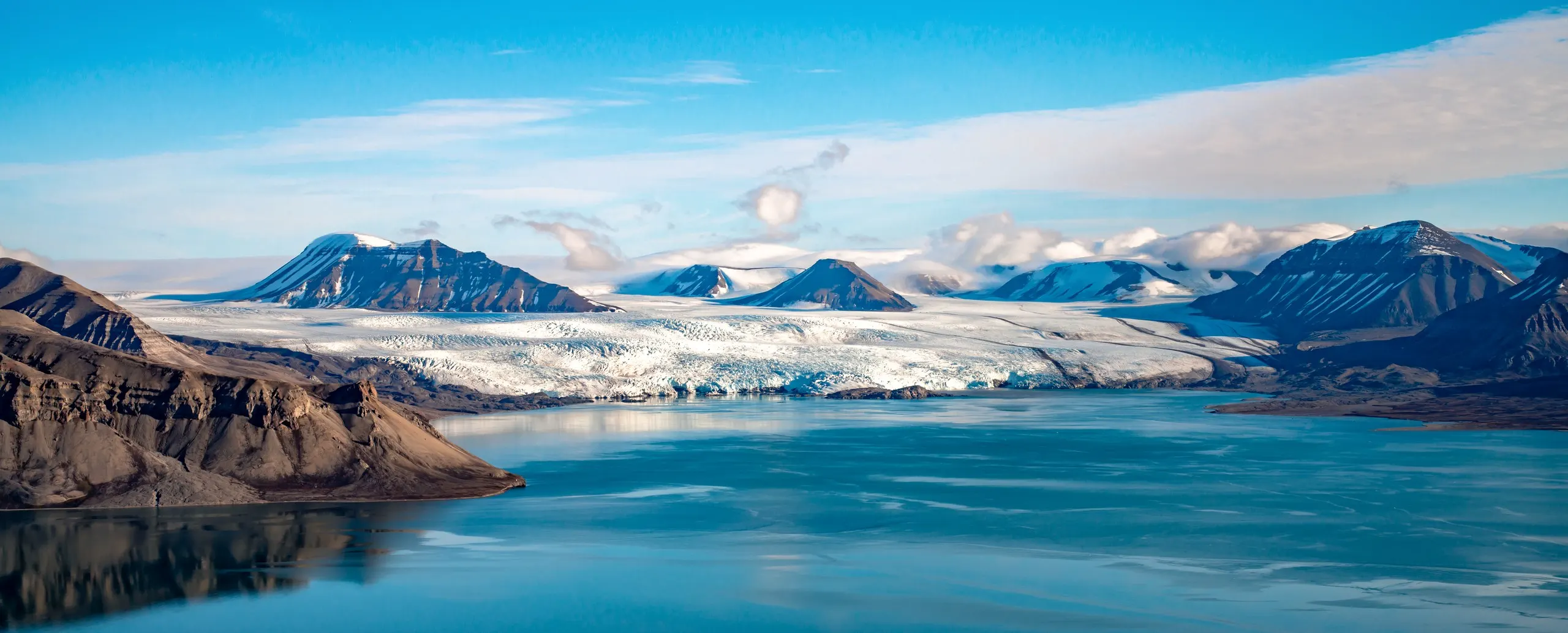
September is the shoulder month. At around +2°C the days shorten fast, the summer season closes out, and the island starts tipping back toward winter. The last boats and cruises run while the first aurora chances return — a brief, rare overlap. The verdict: a quiet, transitional month with good value and a foot in both seasons.
The midnight sun is gone and real nights are back, so the calendar swings quickly. Early September still has usable daylight and active fjords; late September is noticeably darker and colder.
Light & weather
| Avg temp | Daylight | Season |
|---|---|---|
| +2°C | Fast-shortening; real nights return | Midnight Sun (closing) → Polar Night approaching |
Temperatures drop steadily through the month. The returning darkness opens the aurora window again — early but real — making September the first month since spring with a genuine chance at the lights. The autumn tundra is at its most colourful now, and the low light works in your favour for photography in a way the flat midnight sun of high summer does not.
What’s running this month
September straddles two programmes. Boat trips and walrus watching (May–Oct) are still running, and expedition cruises (May–Sep) finish out their season this month. Hiking (May–Sep) is open early but winds down with the weather. ATV ends (Jun–Sep) around now. Aurora chasing (Oct–Mar) effectively begins as the nights darken. Snow activities have not yet started — they wait for proper snow later in autumn.
That makes September the one month where a daytime boat trip and an evening aurora attempt can sit in the same itinerary — a combination impossible in the bright summer and impossible once the boats stop for winter. The catch is reliability: the aurora window is only just opening, weather is unsettled, and availability tightens as operators close out their summer schedules. Plan it as a flexible, opportunistic trip rather than one built around a single must-do activity.
Should you come in September?
Come in September if you want the quietest, best-value way to combine the tail of summer with the first aurora of the season. It suits flexible travellers who do not need guaranteed sun or guaranteed lights, and who like a transitional, uncrowded island with autumn colour on the tundra and softer prices than the summer peak.
Pick a different month if you want reliability. For full summer weather, open fjords, and the widest activity choice, choose July. For dependable aurora and the deep dark season with the most hours of darkness, wait for January. For snow trips like snowmobile and husky with returning daylight, March or April are the call. September works best for travellers who treat its uncertainty as part of the appeal.
Quick answers
- Can you see the northern lights in September in Svalbard?
- Yes, increasingly through the month. The midnight sun is over, the nights are getting dark again, and September is the start of the aurora season — though it is still early and not as reliable as midwinter.
- Is September a good time to visit Svalbard?
- It is a quiet shoulder month. You can still catch the last boats and cruises while the first aurora chances return — a rare overlap. The trade-off is fast-shortening days and cooling weather as the season closes.
- How cold is Svalbard in September?
- Around +2°C and dropping through the month as autumn sets in. Cool and increasingly wintry toward the end.
- Are boats still running in September in Svalbard?
- Yes, early in the month. Boat trips run through October, and expedition cruises run until the end of September, but availability tightens as the season winds down.
Updated 6 June 2026.